You’ve been accepted, congratulations! Learn more about how to make your decision and how to succeed once you’re on campus.

If you’re considering taking a break after graduating high school and before starting college, you’ve probably heard about gap years. A gap year is a break — usually a year — between high school and college to explore interests, gain experience, or prepare for the next step in life. But how do you know if a gap year is right for you? Let’s break it down.
For many high school students, the journey to college comes with unexpected challenges. Beyond academics, there’s a “hidden curriculum” — unspoken rules and norms that aren’t taught in classrooms or found in syllabuses.
Once you embark on your college journey, there is likely going to be some terminology that you don’t understand.
When looking through your college choices, it doesn’t just come down to acceptances; you’ll also want to consider overall fit to the college or university. You may consider academic, social, and financial fit, but you also want to consider personal, career, and geographic fit, as well!
College is a whole new world with so many different opportunities, challenges, and a lot of different support centers and offices. So many, that you might not even know where to start when you need help.
From grants and scholarships to FAFSA and federal student aid, there’s a lot for you to know about financial aid. That’s why we’ve compiled an alphabetical list of the most frequently used financial aid terms— check it out below!
We at the Coalition believe in the value of a college education: Research shows that students with a four-year bachelor’s degree earn an average of $1.3 million more than those with only a high school diploma. But we also realize that the cost to attend college can seem very high.
So, let’s talk about calculating the cost of your college education.
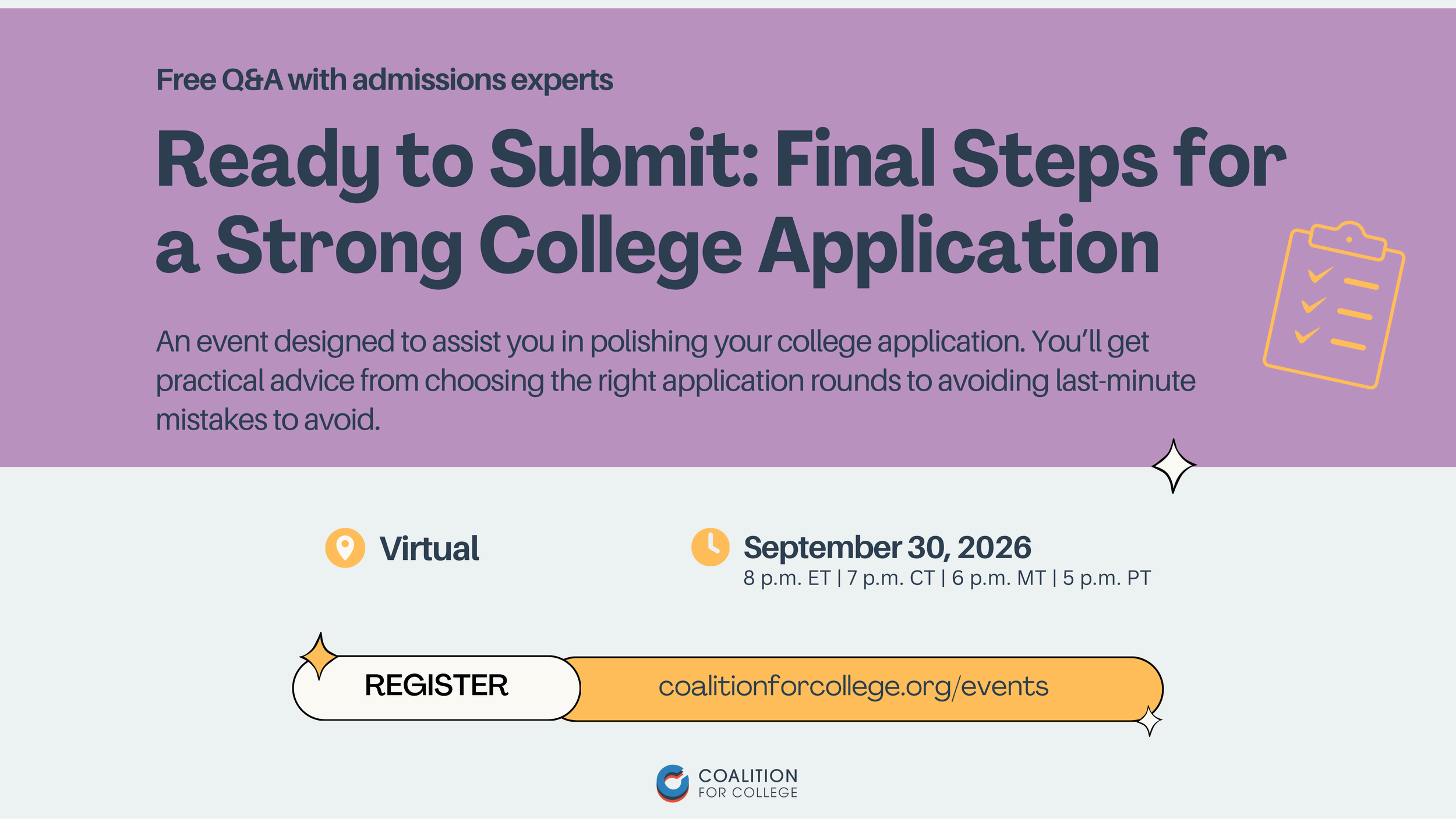
Senior year is here, and application deadlines are approaching fast! In this live panel, admissions counselors from Coalition member colleges will share practical advice on finalizing your applications, polishing your essays and supplemental responses, choosing the right application rounds, requesting recommendations, and avoiding common last-minute mistakes. You’ll leave with a clear checklist to help you submit with confidence.
Featuring admissions counselors from: Binghamton University, Brandeis University, Gettysburg College, and Wheaton College - Massachusetts
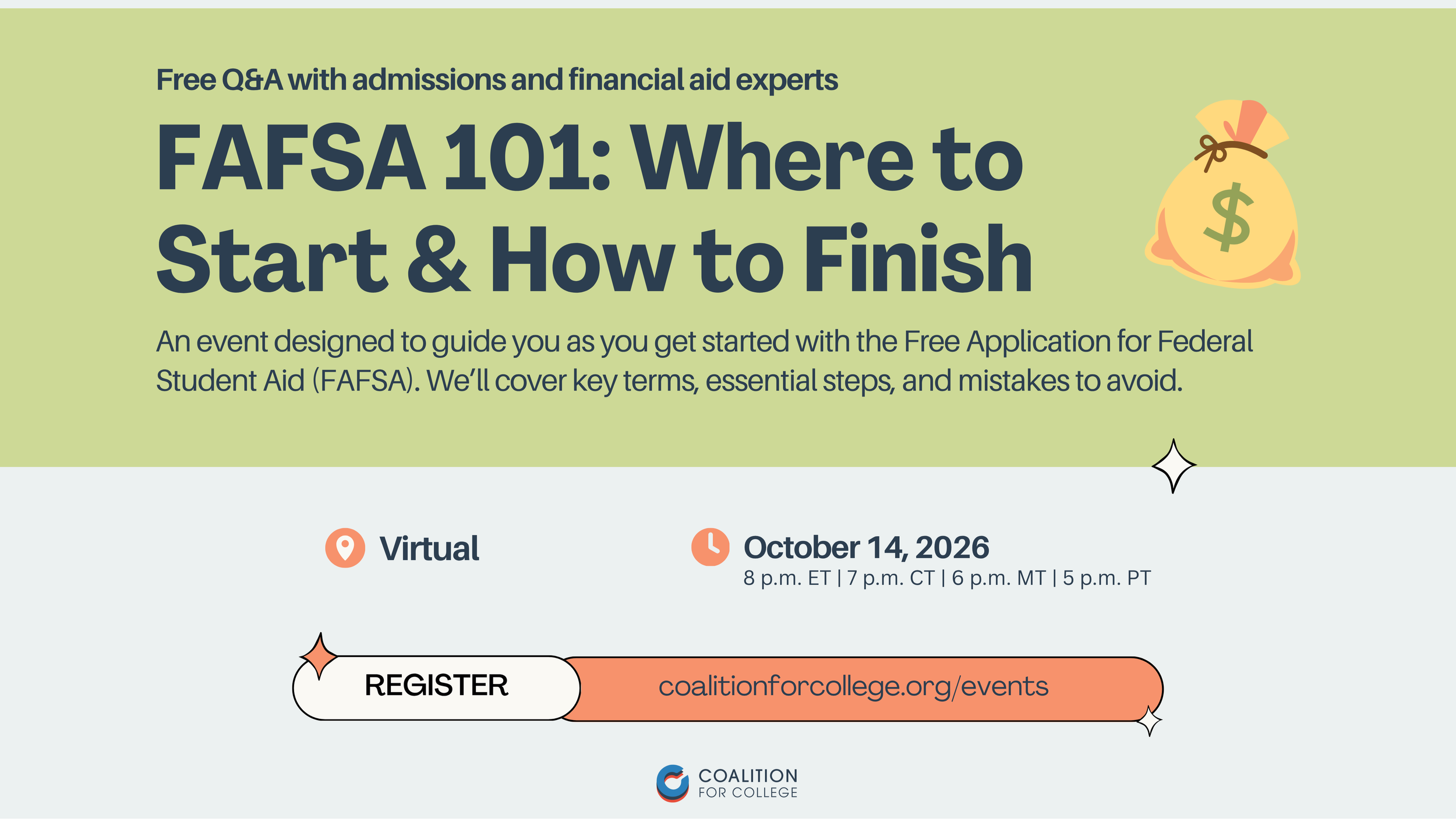
If you’re unsure how to get started with the Free Application for Federal Student Aid (FAFSA) or feel overwhelmed by the process, you’re not alone. In this session, admissions and financial aid experts from Coalition member schools will break it all down—covering key terms, essential steps, and common mistakes to avoid. Bring your questions and leave ready to complete your FAFSA with confidence!
Featuring admissions and financial aid counselors from: Assumption University, California Lutheran University, University of Richmond, and York College of Pennsylvania.
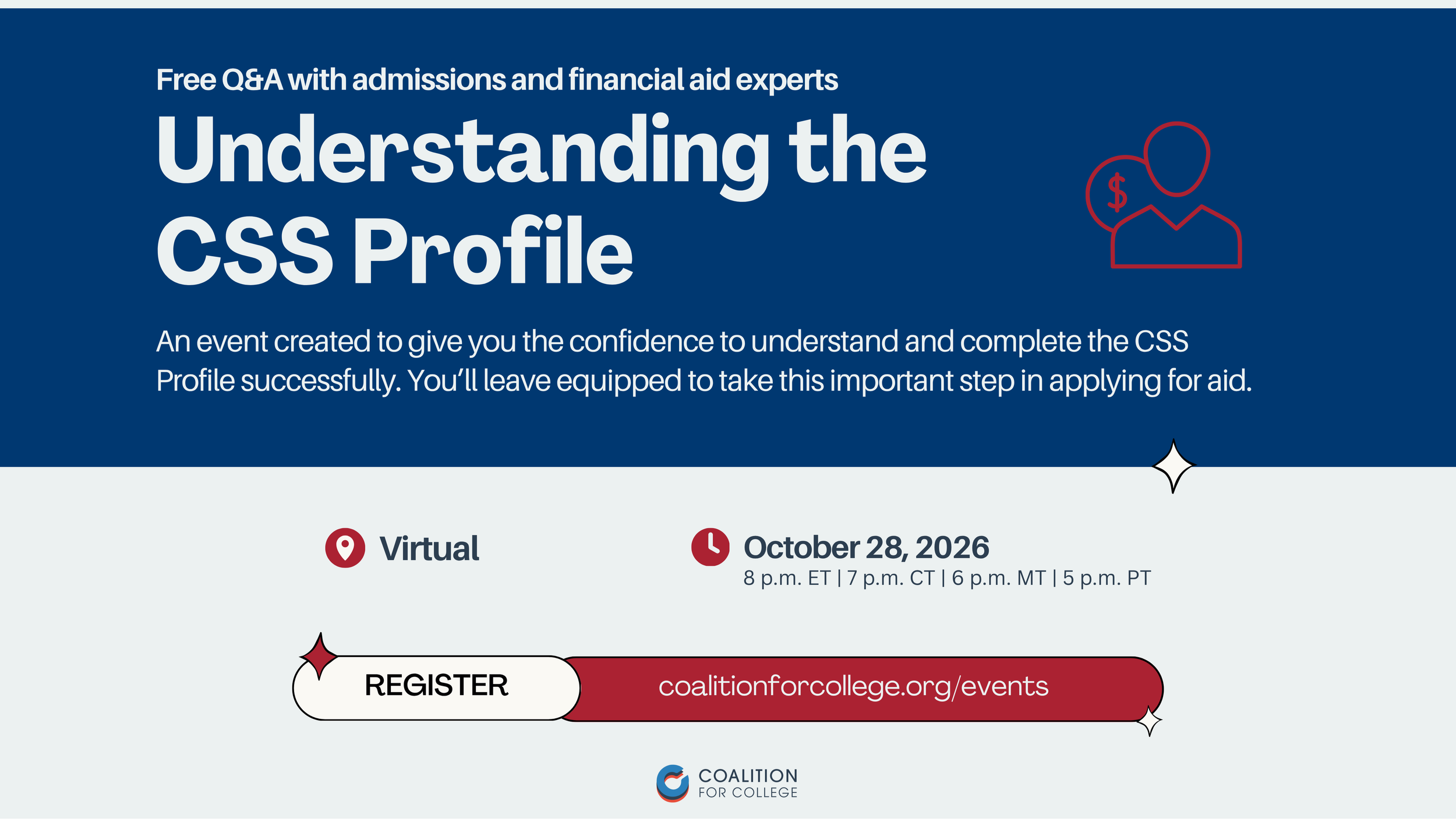
Some colleges on your list may require the CSS Profile in addition to the FAFSA to apply for financial aid. In this panel, admissions and financial aid officers from Coalition member colleges will explain what the CSS Profile is, how schools use it, and tips for completing it successfully. Bring your questions and leave equipped to take this important step in applying for financial aid.
Featuring admissions and financial aid counselors from: Brandeis University, Colby College, Columbia University, and University of Richmond